Dalston Locksmith Service Team
Local locksmith team
14 Oct 2026 10 min read
If your insurer has ever asked whether your front door has a BS3621 lock — and you have had to pause and think about it — you are not alone. It is one of those requirements that appears in the small print of home insurance policies across the UK, often without much explanation. Get it wrong, and you risk a claim being reduced or rejected altogether. Get it right, and you have a door that is genuinely harder to force, as well as a policy that will actually pay out when you need it.
This guide explains what BS3621 means in plain language, why insurers care about it so much, and — most usefully — exactly how to check whether your own front door already meets the standard. If it does not, we also explain what your options are. Dalston Locksmith is a 24/7 mobile locksmith serving Hackney and the wider London area, so if you need a lock assessed or changed after reading this, we are always available to help.
## What BS3621 Actually Means — and Why Your Insurer Keeps Mentioning It
BS3621 is a British Standard for thief-resistant locks. It is published by the British Standards Institution and sets out a strict series of tests that a lock must pass before it can carry the kitemark — covering resistance to picking, drilling, sawing, and manipulation. When a lock earns the BS3621 mark, it has been independently tested to withstand the kinds of attacks a determined burglar is likely to attempt on a residential front door. The standard applies to mortice deadlocks (what most people call a deadlock or a five-lever lock) and, in updated versions, to other lock types including some cylinder-based systems.
Insurers mention BS3621 because, statistically, doors fitted with compliant locks are significantly less likely to be successfully forced. Many home insurance policies — particularly those covering properties in urban areas — make a BS3621 mortice deadlock on external doors either a condition of cover or a requirement for a reduced excess. If your policy lists it as a condition and you do not have one, a successful break-in claim could be disputed. That is not scaremongering; it is straightforwardly how insurance contracts work. The good news is that checking, and if necessary upgrading, your lock is a straightforward job for a skilled locksmith London homeowners and tenants can arrange quickly.
## The Difference Between a Yale Lock and a BS3621 Mortice Deadlock
Most UK front doors have two locks: a nightlatch (commonly called a Yale lock) and a mortice deadlock. The Yale-type nightlatch is the spring-loaded lock that catches automatically when you pull the door shut. It is convenient, but on its own it offers relatively little security — the latch can often be slipped with a card, and the cylinder can be vulnerable to snapping or picking depending on its quality. The mortice deadlock is the second, lower lock that you turn a key in deliberately. It sits inside the door itself rather than on the surface, making it far harder to attack.
A BS3621 mortice deadlock will typically be a five-lever lock — meaning it has five levers inside the mechanism, each of which must align correctly for the key to turn. Locks with fewer levers are easier to pick and do not meet the standard. The kitemark will be stamped or moulded onto the lock faceplate or the box itself. If your door is uPVC or composite, it is more likely to have a multipoint locking system operated by a handle and a single euro cylinder — in which case the BS3621 question becomes partly about the cylinder standard (look for TS007 three-star rated cylinders, which address the specific risk of cylinder snapping). A 24 hour locksmith London residents can reach at any time is the right person to assess which standard applies to your door type.
## How to Check Your Own Front Door Right Now
Start with the mortice lock — the one you turn a key in. Look at the faceplate on the edge of the door (the narrow metal plate visible when the door is open). On a BS3621-compliant lock, you should see the British Standards kitemark: a small stylised kite shape, usually accompanied by the number 3621. It may also appear on the lock cover plate on the inside face of the door. If the mark is there, your mortice lock meets the standard. If there is no kitemark, or if you have only a nightlatch and no mortice lock at all, your door is unlikely to meet your insurer's requirement.
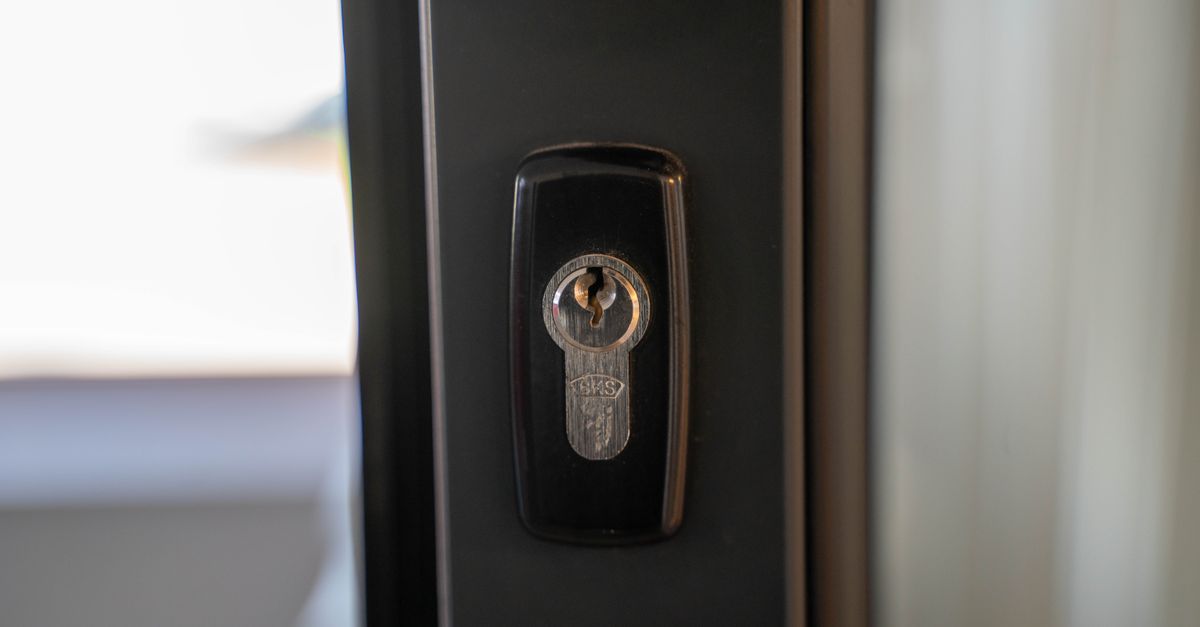
For uPVC or composite doors, the check is slightly different. Look at the euro cylinder — the oval-shaped barrel that your key goes into. A TS007 three-star cylinder, or a one-star cylinder combined with a three-star door handle and a one-star escutcheon (the surrounding plate), will typically satisfy modern insurance requirements. The star rating should be on the cylinder packaging if you have it, or a locksmith can identify the product from the cylinder itself. If you are a tenant in a flat or a house in multiple occupation anywhere in Hackney — from Dalston to London Fields to Clapton — speak to your letting agent or landlord before changing any locks, as they may have an obligation to arrange this themselves. If you are unsure about anything you find, call 020 3757 8288 and one of our experienced locksmiths will talk you through it, without any obligation.
## Lock Change London: What Happens When Your Lock Does Not Meet the Standard
If your check reveals that your mortice lock has fewer than five levers, carries no kitemark, or is simply absent, a door lock replacement London homeowners arrange with a qualified locksmith is the most straightforward solution. For a traditional timber front door, this usually means fitting a new five-lever BS3621 mortice deadlock in the existing mortice pocket, or cutting a new pocket if one does not exist. The locksmith will also check that the door and frame are in good enough condition to hold the lock under force — a perfectly good lock fitted to a rotting frame offers very little protection.
For uPVC doors, the most common upvc door lock repair London properties require is a cylinder upgrade rather than a full lock replacement — swapping the existing euro cylinder for an anti-snap, anti-pick TS007-rated one. This is typically a quick job, but the right cylinder diameter matters, so a professional needs to measure carefully before ordering parts. Factors that affect the final cost of any lock change include the type and condition of your door, the specific lock or cylinder required, the time of day you need the work done, and the travel distance involved. We always confirm an exact up-front price on the phone before anyone comes out, so there are no surprises when the job is done.
## Emergency Locksmith London: What to Do If You Are Locked Out and Suspect a Lock Problem
Being locked out London residents contact us about most often happens for the simplest reasons — a key snapped in the lock, a nightlatch that has seized, or a door that has been pulled shut with the deadlock engaged and no key to hand. In these situations, the right approach is to check whether a trusted neighbour or family member holds a spare key, and to try any other secured entrance to your property. Do not attempt to force a lock or a window; beyond the obvious safety risk, it can cause damage that is expensive to repair and may complicate any subsequent insurance claim.
If you are genuinely stuck, call us on 020 3757 8288. We cover Hackney and the wider London area around the clock — evenings, weekends, and bank holidays included. We send a locksmith straight away and are usually with you in about 30 minutes. When we arrive, we will confirm your identity as the occupier before beginning any work, which is standard professional practice. If your lock has failed or been damaged during the lockout, we can carry out a lock change London properties need on the same visit, and we will confirm the full price before we start. For anyone living in a block of flats with a communal entrance, we can work on your individual flat door without needing access to other residents' spaces.
Frequently asked questions
How do I know if my existing lock is BS3621 without calling a locksmith?+
The quickest way is to open your front door and look at the faceplate on the edge — the narrow metal strip that runs vertically on the door edge. A BS3621-compliant mortice lock will have the British Standards kitemark stamped onto this plate or onto the internal cover plate. The kitemark looks like a small stylised kite or shield shape, usually accompanied by the number 3621. If you cannot find any marking, or if the lock has fewer than five levers visible when you look at the key (five cuts along the blade generally indicates a five-lever lock), it is worth having a qualified locksmith take a look. For uPVC doors with a euro cylinder, the TS007 star rating is what to look for instead.
My insurer says I need a BS3621 lock — will any locksmith do, or does it matter who fits it?+
The standard relates to the lock itself, not to who installs it — but fitting does matter in practice. A BS3621 mortice lock has to be set into the door at the correct depth and aligned precisely with the striker plate in the door frame; a poor installation can compromise the lock's resistance even if the lock itself meets the standard. Use an experienced, insured locksmith who will check the door and frame condition as well as the lock. At Dalston Locksmith, we are insured and experienced in residential lock installations across Hackney and London. If you need a letter or confirmation of the work for your insurer, ask us when you call 020 3757 8288.
I rent my flat — can I upgrade my lock to BS3621 without asking my landlord?+
Generally, no — not without permission. As a tenant, you are entitled to feel secure in your home, but altering the locks without your landlord's or letting agent's knowledge can put you in breach of your tenancy agreement and may cause complications at the end of the tenancy. The right approach is to write to your landlord or letting agent explaining that your insurer requires a BS3621 lock and ask them to arrange or approve the work. If your landlord is unresponsive and you have a genuine security concern, it is worth taking advice from a housing advice service. We are happy to discuss the options with you, and in some cases we can liaise directly with letting agents or managing agents to arrange access and installation.
What is the difference between a BS3621 lock and an anti-snap cylinder — do I need both?+
They address different vulnerabilities on different types of door. BS3621 is a standard for mortice deadlocks, which are most commonly found on traditional timber front doors. An anti-snap cylinder (ideally rated TS007 three-star) is the relevant upgrade for uPVC and composite doors that use a euro cylinder and a multipoint locking mechanism. Some modern timber doors also have euro cylinders rather than a traditional mortice lock, in which case the cylinder standard becomes the more relevant one. In practice, many Hackney homes — particularly older Victorian and Edwardian terraced houses — benefit from having both: a BS3621 mortice deadlock on the lower part of the door and a good-quality cylinder on the nightlatch above. A locksmith can assess your specific door and tell you exactly what your insurer is likely to require.