Dalston Locksmith Service Team
Local locksmith team
29 Jul 2026 15 min read
Your front door is the first line of defence between your home and the outside world, yet many front doors across Hackney — from Victorian terraces in Dalston to purpose-built blocks of flats near London Fields — are still secured by locks that an experienced burglar can defeat in seconds. A flimsy nightlatch, a standard euro cylinder, or a dated mortice deadlock without a British Standard kite mark are not the deterrents most homeowners assume they are. The good news is that the right combination of locks turns an ordinary front door into a genuinely hard target.
This guide cuts through the jargon and explains exactly what makes a front door secure: BS3621 mortice deadlocks, TS007 3-star cylinders, and solid nightlatches — what the standards mean, why insurers care about them, and how to know whether your own door measures up. Whether you are a homeowner, a private tenant, or a landlord managing a Hackney letting, the information below will help you make a confident, informed decision about your front door lock.
## Why the Lock on Your Front Door Matters More Than You Think
Most burglaries in London are not dramatic forced entries — they are opportunistic. A burglar will try a door, assess the lock in a few seconds, and move on if it looks too difficult. That split-second deterrence is provided almost entirely by the quality of the hardware on your front door. In Hackney, as in much of inner London, traditional timber front doors typically carry two locks: a Yale-type nightlatch near the top of the door and a mortice deadlock lower down. Each does a different job, and both need to meet a recognised standard before your door is genuinely secure. uPVC and composite doors — now common on newer builds and housing association properties throughout the E8, E9, and N1 postcode districts — work differently, relying on a multipoint locking mechanism driven by a euro cylinder. The cylinder is the weak point, and it needs careful attention.
It is also worth knowing that many home insurers require a BS3621-rated mortice deadlock on the main front door as a condition of cover. If you are not sure what is currently fitted to your door, a quick inspection by a trained locksmith London homeowners trust can answer the question in minutes — and potentially save you from a rejected insurance claim after a break-in.
## BS3621 Mortice Deadlocks — the Insurance-Standard Lock Explained
A mortice deadlock sits inside a pocket (the mortice) cut into the edge of your door and is operated by a key from both sides. The BS3621 kite mark — issued under British Standard 3621 — tells you the lock has passed independent testing for resistance to drilling, picking, and direct attack. To earn that kite mark, a lock must have at least five levers (each one a separate hurdle for anyone trying to manipulate it without the right key), a hardened steel bolt, anti-drill plates, and a minimum bolt throw of 20 mm so the door cannot simply be flexed open. A five-lever mortice deadlock without the BS3621 stamp may look identical on the outside but has not been put through the same independent torture tests — which is exactly why insurers specify the standard by name rather than just asking for 'a mortice lock'. If your timber front door has only a nightlatch and no mortice deadlock, or has a mortice lock without the BS kite mark, a front door lock change is one of the most cost-effective security upgrades you can make to your home.
Fitting a BS3621 lock is not a DIY job in the way that, say, changing a lightbulb is. The mortice pocket must be cut to precise dimensions, the striker plate must be positioned accurately, and the door edge must be strong enough to hold the lock under impact. A skilled locksmith will assess the door, choose the correct lock size, and fit it so the bolt engages cleanly every time. If you are curious about how to change a front door lock or whether your existing one qualifies, we are happy to advise over the phone — call us on 020 3757 8288 and we can talk through what you have currently and what an upgrade would involve.
## TS007 3-Star Cylinders — the Answer to Cylinder Snapping on uPVC Doors
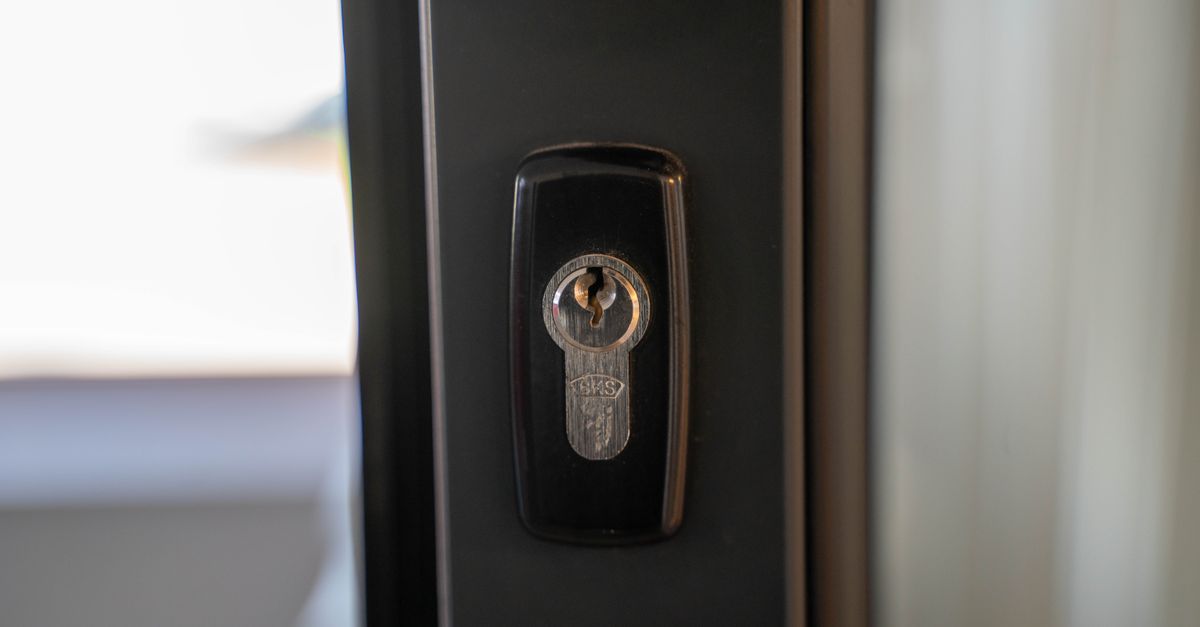
Cylinder snapping is the technique burglars use most frequently on uPVC and composite doors fitted with standard euro cylinders. It takes under a minute, leaves almost no noise, and works because a cheap cylinder will shear cleanly when enough rotational force is applied — leaving the internal cam exposed so the latch or multipoint lock can be turned directly. If you live in a mid-terrace in Stoke Newington, a ground-floor flat in Shoreditch, or anywhere else with a uPVC front door, this is the specific attack your lock needs to resist. The TS007 standard (published by the Door and Hardware Federation) rates cylinders on a star system. A 3-star cylinder earns its rating by passing tests for snapping, picking, drilling, bumping, and manipulation. It incorporates a snap-off sacrificial section at the front, a hardened steel core that resists drilling, and anti-pick pins that make picking impractical. Combined with a 1-star door and a 1-star door handle to make up the full TS007 3-star system, or as a standalone 3-star cylinder, this is the benchmark that most loss adjusters and security-conscious letting agents now specify for uPVC door lock repair London jobs and new installations alike.
One important detail: even a 3-star cylinder must be the right length for your door. A cylinder that protrudes more than 3 mm beyond the face of the lock on the outside is significantly more vulnerable to snapping because there is more leverage available. During any door lock replacement London, a qualified locksmith will measure the backset carefully and select a cylinder of the correct dimensions — something that is easy to get wrong when ordering parts without experience. If you are wondering how to change a front door lock cylinder yourself, the safest answer is to have the measurement and fitting done professionally so you are not left with a correctly rated cylinder installed in a way that defeats its own purpose.
## Nightlatches — Convenience and Security Are Not Mutually Exclusive
The Yale-type nightlatch is the lock most people use most often — the one that engages automatically when you pull the front door shut behind you. Its convenience is also its traditional weakness: a standard nightlatch has a spring-loaded latch bolt that can be pushed back manually or lopped off with a suitable tool if the door frame is poor quality. A high-security nightlatch addresses this in two ways. First, the latch bolt deadlocks automatically when the door closes or when a key is turned from outside, so it can no longer be pushed back without a key. Second, a solid brass or stainless steel body with a hardened steel bolt shackle resists sawing and drilling. For a Victorian or Edwardian timber front door — the kind found throughout the streets around Ridley Road Market and the residential terraces between Dalston Junction and Hackney Central — a good quality deadlocking nightlatch combined with a BS3621 mortice deadlock lower down gives the two-point engagement that insurers prefer and that makes a door genuinely difficult to attack quickly. For a front door knob and lock combination on period properties, it is worth checking that the knob or handle assembly does not interfere with the mortice lock operation — a point a professional locksmith can verify during any lock change London visit.
Some front door knob with lock arrangements sold as a combined set are designed for internal doors and do not meet any external security standard. If you have a knob assembly on your front door, ask a locksmith to check the rating before assuming it contributes to your overall security. It is a small check that takes moments and can reveal a significant gap in your defences.
## Getting Your Locks Right — Practical Next Steps for Hackney Homeowners
Knowing the standards is only useful if you act on the information. The simplest starting point is to look at the face of your mortice deadlock and find the kite mark — it will say BS3621 if it qualifies. For your euro cylinder, check whether it protrudes beyond the door furniture and look for a TS007 3-star mark or a Sold Secure Diamond rating on the packaging if you have it. If you cannot find either mark, or if you have recently moved into a property and are unsure who else might have a copy of the current keys, a lock change is the sensible first step. This applies equally whether you are a homeowner, a new tenant, or a landlord preparing a property for new occupants — a standard lettings recommendation from most Hackney letting agents. For anyone locked out of their home at any hour, our team operates as a 24 hour locksmith London service and we send a locksmith straight away, usually arriving within about 30 minutes. We cover all of Hackney and the surrounding areas of inner east and north London, and as a 24/7 mobile emergency locksmith London, we handle urgent lockouts as well as planned upgrades — there is no job too routine and no hour too late. For commercial properties, office premises, and rental blocks, our experienced team also provides a commercial door locksmith service, covering everything from front door lock change on shopfronts to multipoint lock repair on communal entrances. Whatever the job, we confirm an exact up-front price before any work begins — the final quote depends on factors such as the lock type, the parts required, the time of day, and travel distance, so we give you a clear figure on the phone first. To find out exactly what your front door needs, or to book a lock change London at a time that suits you, call us now on 020 3757 8288 — we answer every hour of every day.
## 25 Front Door and Home Lock Services We Provide Across Hackney and London
Whether you need urgent help tonight or want to plan a security upgrade at your convenience, here is a clear picture of what our mobile locksmith team covers across the locked out London calls we receive every day: emergency lockout response for timber, uPVC, and composite front doors; BS3621 mortice deadlock supply and fitting; TS007 3-star anti-snap euro cylinder replacement; high-security deadlocking nightlatch installation; multipoint lock repair and replacement on uPVC doors; upvc door lock repair London for broken or stiff mechanisms; anti-drill, anti-pick, and anti-bump cylinder upgrades; door lock replacement London for worn or damaged locks; wooden door frame repair following attempted forced entry; lock change London after a lost or stolen key; lock change following a change of tenant or occupant; communal entrance lock replacement for blocks of flats; deadlocking nightlatch fitting on Victorian and Edwardian timber doors; euro cylinder sizing and correct-length replacement; door handle and lock assembly check and replacement; front door knob and lock assessment for security rating; anti-snap cylinder fitting on ground-floor and basement flats; lock changes for landlords between tenancies; emergency boarding and temporary security after a break-in or failed lock; commercial door locksmith services for offices, shops, and rented premises; multipoint lock mechanism replacement on composite doors; snapped cylinder removal and emergency access; nightlatch deadlock mechanism service and repair; hinge bolt installation to reinforce the hinge side of a door; and security audit of all external door locks on a property with written recommendations.
## When to Call an Emergency Locksmith London — and What to Expect
The most common calls we receive are straightforward lockouts — a key left inside, a lock that has stopped working, or a door that has blown shut on a latch that was not supposed to engage. If you are locked out London at any point, the first sensible steps are to check whether a window has been left open (at ground level only, and only if it is safe to access), whether a trusted neighbour holds a spare key, or whether there is a back or side entrance you can use. If none of those options apply, do not attempt anything that could damage the door or put you at risk — call a professional instead. As an emergency locksmith London team, we can open most front doors without causing damage, and we will always tell you honestly if the method required is likely to affect the lock or the frame before we proceed. Once you are back inside, we can discuss whether a lock change is advisable — for example, if the lock was already worn, or if the lockout happened because of a fault rather than a lost key. For planned work such as upgrading to a BS3621 deadlock or fitting a TS007 3-star cylinder, there is no need for urgency — we can visit at a time that suits you, assess the door properly, and carry out the work neatly and thoroughly. Either way, call 020 3757 8288 and we will talk you through the options clearly before anyone visits.
## Independent Trader Matching, Local Directories, and Why We Handle Everything Directly
Some homeowners search for services through platforms that promise to match them with a local trader or list verified businesses in their area. While these can be useful for certain trades, locksmith work — particularly emergency locksmith London call-outs — benefits from going directly to a team you can speak to immediately, verify on the spot, and trust to arrive promptly. We do not operate through third-party matching platforms or directories, and we do not subcontract your job to an unknown operative. When you call 020 3757 8288, you speak directly to our team, we give you a clear price on the phone, and we send one of our own experienced locksmiths to your door. That directness is especially important when you are locked out at midnight or need a commercial door locksmith for a business premises that cannot wait until Monday morning. It also means there are no hidden fees added after the fact by a middleman — the price we quote is the price you pay.
Frequently asked questions
What is the difference between a BS3621 lock and a standard five-lever mortice deadlock?+
Both look similar from the outside, but a BS3621 lock has been independently tested and certified to resist specific attack methods including picking, drilling, and direct bolt attack. A standard five-lever mortice lock without the BS3621 kite mark may use the same basic lever mechanism but has not passed those tests. Most home insurers specify BS3621 by name, so fitting a non-kite-marked five-lever lock may leave you technically outside your policy conditions. If you are unsure what is currently fitted to your door, our team can check and advise — call us on 020 3757 8288.
How do I know if my uPVC door cylinder is at risk of snapping?+
The most visible warning sign is a cylinder that protrudes more than a few millimetres beyond the door furniture on the outside — this gives an attacker additional leverage. If your cylinder has no visible TS007 3-star or Sold Secure Diamond marking, it is almost certainly a standard cylinder that will not resist a snapping attack. As a rule of thumb, if the property is on the ground floor, faces a road or alleyway, or is in a block of flats with a communal entrance that is not always secure, upgrading to a 3-star anti-snap cylinder is a straightforward and worthwhile precaution. We carry out upvc door lock repair London and cylinder replacements across Hackney and the surrounding area.
Can I change my front door lock myself, or do I need a locksmith?+
Replacing a like-for-like euro cylinder on a uPVC door is a task some confident DIYers manage, provided they measure the backset correctly and buy a cylinder of the right length and security rating. However, fitting a BS3621 mortice deadlock, cutting a new mortice pocket, or adjusting a multipoint mechanism requires specific tools and experience — getting it wrong can leave the lock in a worse state than before, or result in a lock that appears to work but does not engage properly under pressure. For a correct fit and peace of mind, a professional lock change is the safer route. We confirm an exact price before the work starts — the factors that affect the final quote include the lock type, the parts required, the time of day, and travel distance — so there are no surprises on the day.
I have just moved into a Hackney flat — do I need to change the locks?+
It is strongly advisable. You have no way of knowing how many copies of the current key exist or who holds them — previous tenants, tradespeople, estate agents, or others may all have had access. A lock change is the only way to be certain that only the keys you hold open your door. If you are a tenant, check your tenancy agreement and speak to your letting agent or landlord first, as permission is usually needed before changing locks in a rented property — many landlords are willing to arrange or contribute to the cost. As a locksmith London team covering Hackney and the surrounding area, we handle lock changes for landlords, letting agents, and new tenants regularly, and we can advise on what is needed to meet standard insurance requirements at the same time.