Dalston Locksmith Service Team
Local locksmith team
26 Aug 2026 14 min read
Most people never think about their euro cylinder until something goes wrong — the key turns stiffly, the door jams, or worse, they find themselves locked out on a wet Tuesday evening in Hackney with the shopping still in the boot. Getting the cylinder size right before you buy a replacement is a two-minute job that saves a wasted trip to the hardware shop, prevents a forced fit that damages your door, and — most importantly — helps you choose a cylinder that is not sticking out past the door furniture, which is precisely what makes so many east London front doors easy targets for cylinder snapping.
This guide walks you through exactly how to measure a euro cylinder, explains what the numbers mean, and tells you why the overhang on a poorly fitted cylinder is not a minor cosmetic issue but a genuine security weakness. Whether you are a homeowner on Queensbridge Road, a tenant in a block of flats near London Fields, or a landlord managing a property through a letting agent in Dalston or Stoke Newington, getting this right is quicker than you think.
## What a Euro Cylinder Actually Is (and Why the Size Matters So Much)
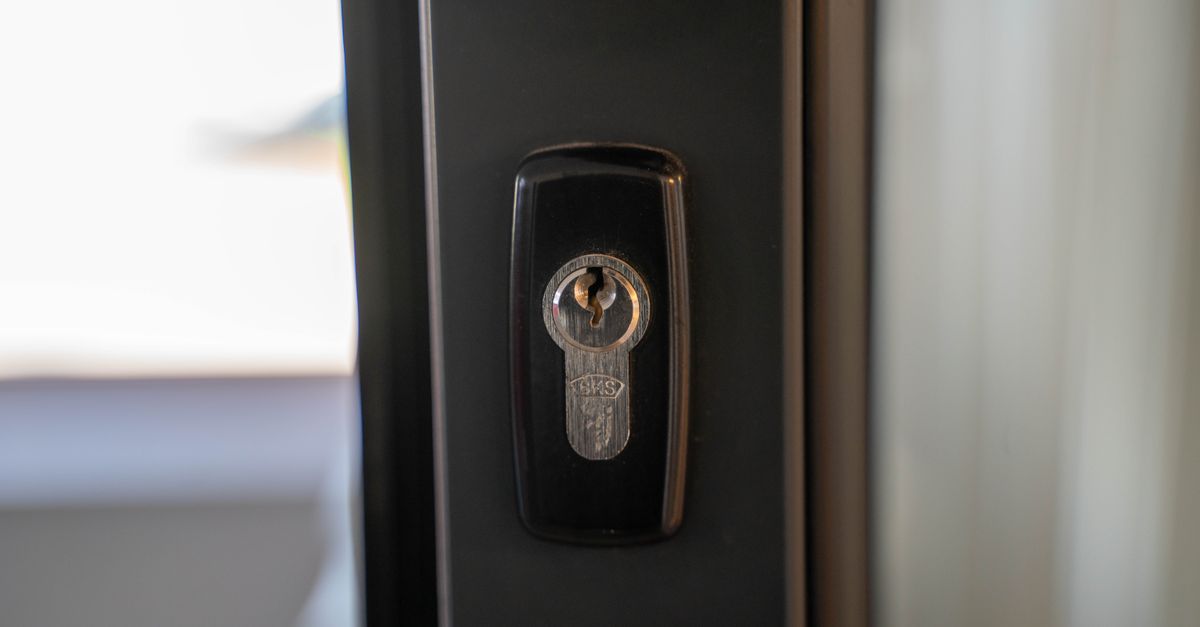
A euro cylinder is the barrel-shaped lock mechanism that sits inside the lock case on most uPVC and composite front doors, and on many timber doors fitted with a modern lock body. When you put your key in and turn it, you are operating the euro cylinder — it is the part that can be replaced without changing the entire door furniture. Euro cylinders come in a huge range of sizes because door thicknesses vary considerably, and a cylinder that is even a few millimetres too long on the outside face of the door creates a protruding lip that a burglar can snap off with a pair of grips in seconds, releasing the lock mechanism entirely. This technique, known as cylinder snapping, is well documented and has been a known vulnerability on uPVC doors across London for years. Fitting the correct size — and ideally an anti-snap, TS007 3-star rated cylinder — removes that weakness entirely.
The size of a euro cylinder is always expressed as two numbers: the external measurement (from the outside face of the door to the centre of the fixing screw hole) and the internal measurement (from the inside face to the same centre point). You will see this written as, for example, 35/45 or 40/50. The first number is always the outside, the second is always the inside. Getting those two numbers right before you order or buy anything is the entire job.
## How to Measure a Euro Cylinder: Step-by-Step
You will need a flat-head or Phillips screwdriver and a steel tape measure or a rigid ruler. Start by opening the door so you have easy access to the edge. On the edge of the door you will see a small screw — usually a single grub screw or a standard machine screw — that runs horizontally through the lock body into the cylinder. That screw is what holds the cylinder in place. Do not remove it yet; you are just locating it so you know where the centre point of the cylinder is. Now, with the door open and the key removed, look at the face of the cylinder on the outside of the door. Measure from the outer face of the door furniture (the escutcheon plate or the outer edge of the cylinder itself if there is no plate) to the centre of that fixing screw hole. Write that number down — this is your external measurement. Then measure from the inner face of the door to the same centre point. Write that down — this is your internal measurement. Add a couple of millimetres of tolerance if either measurement lands on an odd number, rounding up to the nearest 5mm increment that cylinder manufacturers use.
One common mistake is measuring from the edge of the door leaf itself rather than from the face of the door furniture or escutcheon. If your door has a thick steel or uPVC outer handle plate, that plate adds millimetres to the effective external measurement. Always measure from the outermost surface that the cylinder passes through, not from the raw door material. If you are replacing a cylinder that is already fitted and accessible, you can also simply measure the cylinder itself directly after removing it: lay it flat, find the centre of the cam (the small rotating lug in the middle), and measure to each end. That gives you a quick cross-check. If you are at all uncertain, take a photo of the door edge, the existing cylinder, and your measurements, and call 020 3757 8288 — our team can usually identify the correct size from that information before we come out.
## Why Overhang Is a Security Risk — and What Anti-Snap Cylinders Do Differently
If the external measurement of your cylinder is longer than it needs to be — meaning the cylinder protrudes noticeably beyond the outer door furniture — that exposed section acts as a lever point. A would-be intruder applies rotational force to the exposed end, the cylinder snaps at its weakest internal point (usually just behind the anti-pick pins), and the cam drops, allowing the door to open without a key in well under a minute. This is not a theoretical risk on Hackney streets; it is a technique that has been used on uPVC-doored terraces and flats throughout E8, E9, and E2 for years. The fix is straightforward: fit a cylinder where the external measurement is no more than a millimetre or two proud of the door furniture, and choose a cylinder that carries the TS007 3-star rating or at least an anti-snap designation. These cylinders have a sacrificial break point engineered into them so that even if the exposed end snaps off, the internal mechanism remains locked and cannot be manipulated.
Anti-snap cylinders also typically include anti-pick, anti-drill, and anti-bump features, which address the other mechanical attack methods that a locksmith London team will tell you are still used opportunistically. Your insurer may also require a minimum standard of cylinder — it is worth checking your policy wording, particularly if you are in a privately rented flat where the landlord is responsible for the lock specification. If you need a lock change London, our team carries anti-snap cylinders that suit the most common uPVC and composite door profiles across Hackney and the surrounding area, and we can confirm the exact specification before any work begins.
## Reading the Numbers and Choosing the Right Replacement
Once you have your two measurements — say 35mm outside and 45mm inside — you are looking for a 35/45 euro cylinder. That total (80mm in this case) is the overall length. Most cylinder manufacturers list their products by the combined total and then by the split, so a 35/45 may also be listed as an 80mm cylinder 35/45. If your door is a standard uPVC door with a central locking multipoint mechanism, the most common splits you will encounter in London properties are 35/35, 40/40, 35/45, 40/50, and 45/55 — but do not assume: always measure your specific door because panel thickness, handle position, and door profile vary between manufacturers and even between installation years on the same street. Composite doors fitted on newer Hackney conversions and new-build flats around Dalston Junction tend to run slightly thicker, which often means a longer internal measurement.
If you are dealing with a timber door that has been retrofitted with a euro cylinder lock body — common on older Victorian terraces throughout Hackney — the split can be unusual, particularly if the door has been built up with draught-proofing strips or a secondary weather seal. In that case, re-measure carefully and do not rely on the numbers stamped on the old cylinder, since previous owners may have fitted whatever was to hand rather than the correct size. When in doubt, a 24 hour locksmith London can measure, source, and fit the right cylinder in a single visit, usually within about 30 minutes of you calling.
## When to Call a Locksmith Rather Than DIY — and What to Expect
Swapping a euro cylinder is well within the capabilities of a confident DIYer when the door is working normally, the existing cylinder comes out cleanly, and the replacement is the correct size. However, there are several situations where calling a skilled locksmith is the sensible choice: the door is locked and you do not have a working key; the cylinder has already been snapped or drilled; the fixing screw is seized or the cylinder has been installed with the wrong size and has deformed the lock body; or you are in a tenanted property and need a professional record of the work carried out. If you are locked out London, do not attempt to force the cylinder or try to manipulate the mechanism yourself — you risk damaging the multipoint lock body, which turns a straightforward cylinder replacement into a significantly more involved door lock replacement London job. Instead, check whether a window is unlatched, whether a neighbour holds a spare key, or whether your letting agent has an out-of-hours contact. If none of those apply, call 020 3757 8288 and we will send someone straight away — we are usually with you in around 30 minutes.
For upvc door lock repair London, the price of any call-out depends on factors including the type of lock and door, the time of day (evenings, weekends, and bank holidays affect availability and logistics), travel distance, and the parts needed for the specific job. We confirm an exact up-front quote on the phone before anyone comes out, so there are no surprises on the doorstep. As a 24/7 mobile locksmith London team covering Hackney and the surrounding postcodes — including E8, E9, E5, E2, N1, and N16 — we carry a range of anti-snap euro cylinders to suit the most common door profiles in the area, and we can advise on the best specification for your door and your insurer's requirements during the same visit. If you have been wondering how to change a lock safely and to the right standard, that one call is genuinely the fastest route to a secure, correctly fitted cylinder.
## 25 Services We Provide Across Hackney and East London
Our mobile locksmith team covers a wide range of residential and light commercial lock work across Hackney and the wider east London area. Services include: euro cylinder measurement, supply, and fitting; anti-snap and TS007 3-star cylinder upgrades; full door lock replacement London for uPVC, composite, and timber doors; multipoint lock repair and replacement on uPVC and composite doors; Yale-type nightlatch installation and replacement; 5-lever mortice deadlock fitting to BS3621 standard; wooden door lock change London; front door lock upgrades for insurance compliance; upvc door lock repair London including dropped door adjustments; emergency locksmith London response to lockouts; lock change London following a break-in or attempted forced entry; lock change after lost or stolen keys; tenant lock change on change of occupancy; landlord lock change between tenancies; communal entrance lock repair for blocks of flats; letterbox lock fitting; door handle and backplate replacement on multipoint doors; door alignment and hinge adjustment where door drop is causing the lock to bind; snapped or drilled cylinder extraction and replacement; damaged door furniture replacement; lock health check and security assessment for the full door set; advice on BS3621-compliant lock combinations for insurance purposes; non-destructive entry for residential lockouts where ownership can be verified; lock-down (temporary security) following a break-in; and general security advice tailored to the specific door type, street, and property layout.
## A Note on Hackney Doors Specifically
Hackney's housing stock is unusually varied for a single London borough. You have Victorian and Edwardian terraces on streets like Mapledene Road and Downs Road where the front door is a solid timber door with a nightlatch and a 5-lever mortice deadlock recessed into the edge. You have 1960s and 1970s council blocks around Well Street and Pembury Estate where the communal entrance has a separate lock arrangement from the individual flat front door. And you have the newer conversions and new-build flats around Dalston Junction, Haggerston, and Hoxton where uPVC and composite doors with multipoint locking are standard. Each of these door types has a different euro cylinder profile — or in some cases no euro cylinder at all — and each has different vulnerability points and different insurer requirements. Getting the measurement right, and understanding which cylinder standard is appropriate for your specific door, is not a one-size-fits-all exercise. That is why a brief call to a team that works on Hackney doors every day is often quicker than working through generic online guidance that was written without a specific postcode district in mind.
Frequently asked questions
How do I know if my euro cylinder is the right size for my door?+
The simplest check is to look at the outer face of your door when it is closed. If the cylinder protrudes noticeably beyond the surrounding door furniture or escutcheon plate, it is too long on the external side and should be replaced. The correct cylinder should sit flush or just barely proud of the face plate. Measure the external and internal dimensions as described above, compare them to the cylinder that is fitted, and if they do not match — or if the existing cylinder is not anti-snap rated — it is worth replacing it. If the cylinder is seized or the door is not closing properly, call 020 3757 8288 and we can assess it directly.
Can I change a euro cylinder myself, or do I need a locksmith?+
If the door is fully operational, you have a working key, and you are confident with a screwdriver and a tape measure, swapping a euro cylinder is a manageable DIY task. You remove the single fixing screw on the edge of the door, turn the key slightly to retract the cam, and the cylinder slides out. The replacement slides in and the screw goes back. The risks come when the cylinder is damaged, the fixing screw is seized, the door is misaligned, or you are unsure of the correct size. In any of those situations — or if the door is already locked and you cannot get in — it is safer and usually quicker to call a professional. Attempting to force a stuck or incorrectly sized cylinder can damage the multipoint lock body, which turns a minor job into a much larger one.
What does a 3-star TS007 cylinder actually do that a standard cylinder does not?+
A TS007 3-star cylinder meets a British Standards specification that requires resistance to snapping, picking, drilling, and bumping at a tested and verified level. The key difference from a standard cylinder is the engineered sacrificial break point: if the external end is subjected to the rotational force used in a snapping attack, that section breaks away cleanly but the internal locking mechanism remains engaged and cannot be released. Standard cylinders, particularly older or budget ones, snap at a point that releases the cam and allows the door to open. Many home insurance policies in the UK now require cylinders that meet at least a one-star TS007 rating or the Sold Secure Diamond standard, so fitting a 3-star cylinder often satisfies both your security need and your insurer's requirement in one step.
How quickly can a locksmith reach me in Hackney if I am locked out?+
We cover Hackney and the surrounding east London area around the clock, every day of the year including bank holidays. When you call 020 3757 8288, we send a locksmith straight away and are usually with you in around 30 minutes, though we cannot guarantee an exact arrival time since it depends on where the nearest available locksmith is at that moment and what the traffic is doing. We will give you a realistic estimate when you call, and we confirm the price of the job before anyone sets off, so you know exactly what you are agreeing to.